Paper City: Northern Pa. Paper Mill Has Sustained Generations of Families
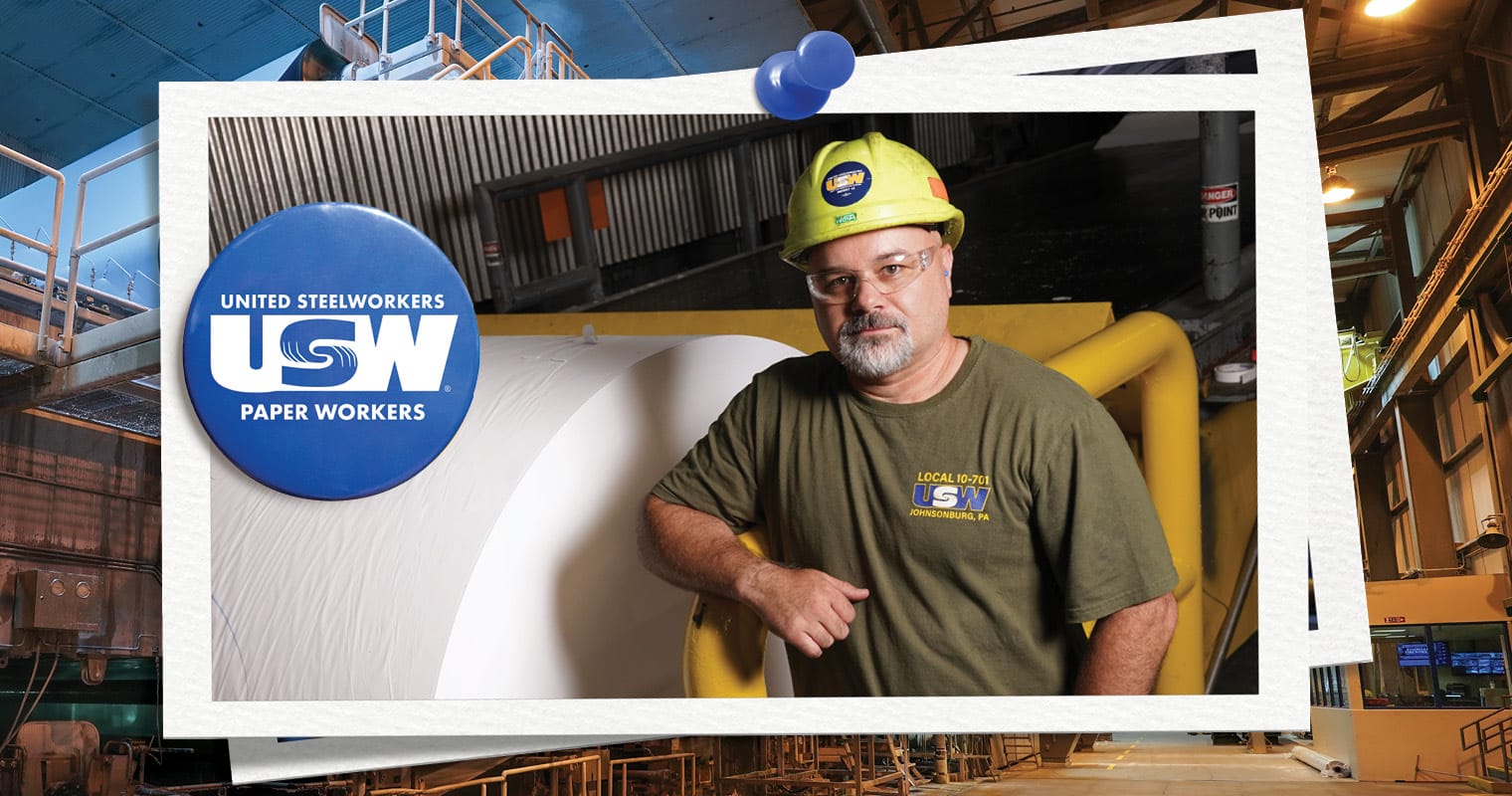
Long before workers banded together in 1942 to form the USW, Dan Cherry’s great-great grandfather lost his life due to unsafe working conditions at the Domtar paper mill in Johnsonburg, Pa.
Cherry, a fifth-generation paper worker with several dozen family members who also worked at the mill over the years, said the presence of the USW at the facility has transformed the quality of life for families like his throughout the small town of 2,000 people.
“I am proud to know how much my family has contributed to the many years of success that Johnsonburg has achieved,” said Cherry, who serves as president of Local 10-701. “The presence of the USW helps keep the work force together.”
Economic Engine
In addition to helping the workers at the mill – now operated by Domtar – the USW sets standards for other employers in the area in terms of pay and benefits, safety and retirement security, lifting up workers and driving the economy throughout the region, Cherry said.
“Having a good-paying mill like this in the area, it helps workers in other industries get wages and health care comparable to ours,” he said.
The strong standards negotiated by the USW also help to reduce turnover and contribute to a positive work environment for the 255 union members there, said Darryl Hanes, who serves as recording secretary for Local 10-701.
“I think that’s why people stay,” Hanes said. “And why we have so many members who have been here for so many years.”
With about 350 workers, the mill is one of the largest employers in the region.
“If it wasn’t for the mill,” said Cherry, “we wouldn’t have a town.”
‘The Paper City’
Because quality timber is plentiful in the northern Pennsylvania region, about halfway between Pittsburgh and Buffalo, paper has been Johnsonburg’s major industry since its earliest days. It wasn’t long before the town, incorporated in 1891 not far from the Allegheny National Forest, became known as “The Paper City.”
The mill, once the largest coated paper plant in the world, has operated under various owners since the late 19th century, including a stretch in the mid-20th century when it was owned by the publisher of the Saturday Evening Post, then one of the nation’s most popular magazines.
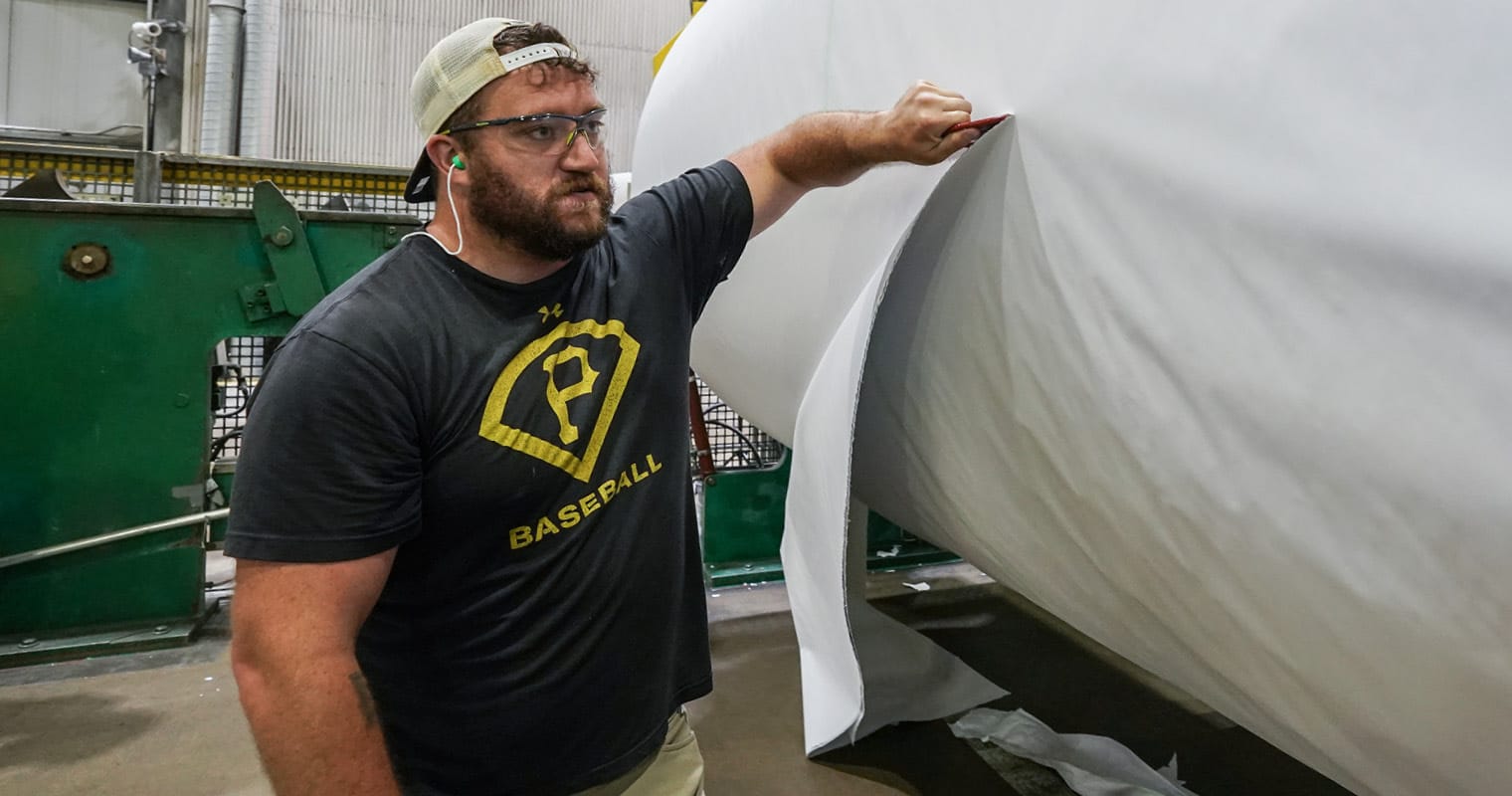
Today, the mill is a state-of-the-art facility that produces mainly uncoated freesheet paper used for stationery, brochures, mailers, envelopes and hardbound books. Famously, the immensely popular “Harry Potter” book series was printed on paper from Domtar’s Johnsonburg mill.
Domtar, one of the largest paper companies in North America, employs about 2,300 USW members at nine U.S. facilities. In addition to the Pennsylvania mill, USW members work at eight Domtar plants in Arkansas, Kentucky, Michigan, North Carolina, Tennessee and Wisconsin.
National Solidarity
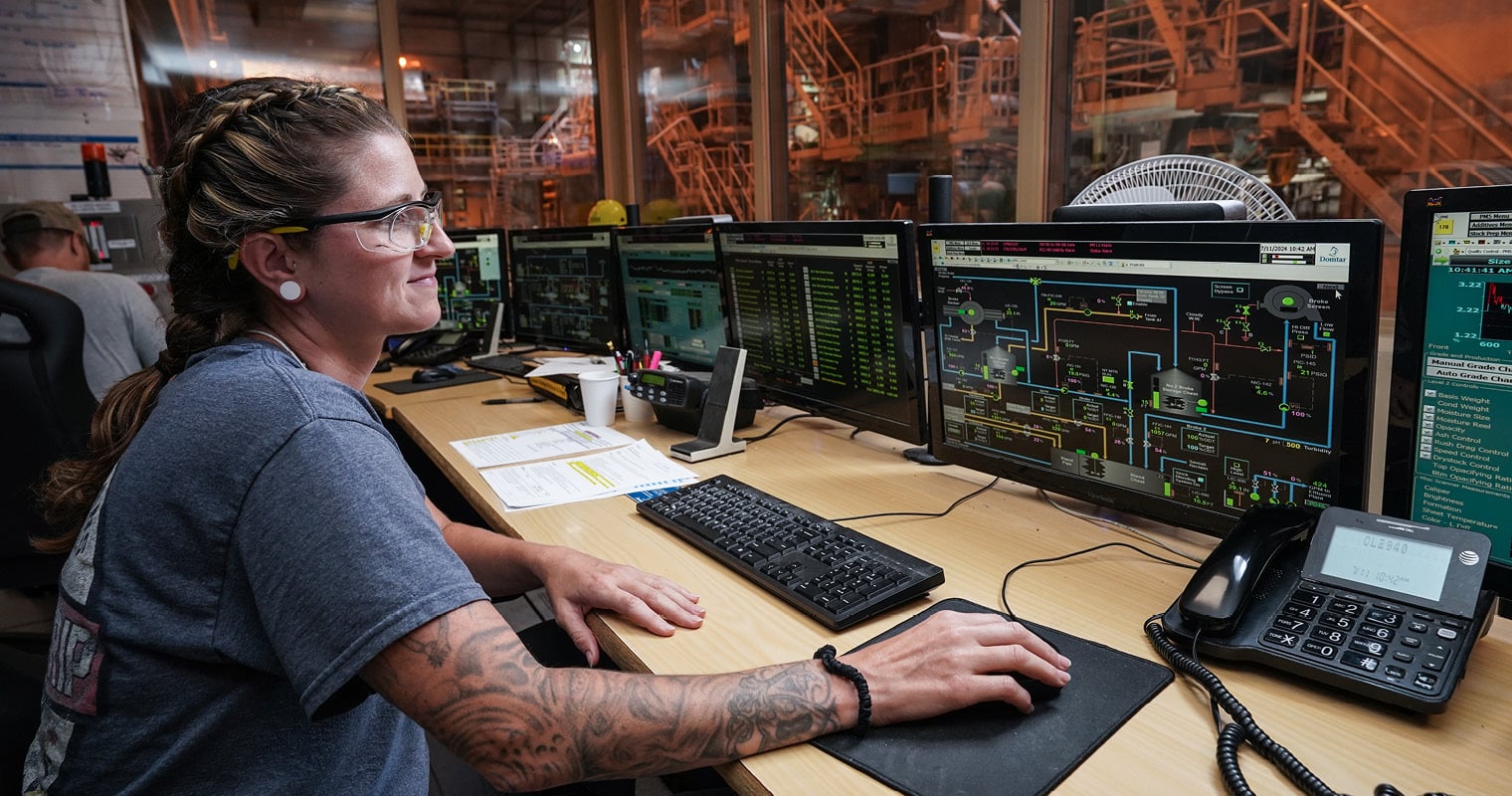
Collaborating with other USW members across the country, at Domtar and other paper companies, gives members in tiny Johnsonburg the strength they need to achieve fair wages and safer working conditions, Cherry said.
The USW’s Domtar Paper Council, which consists of members from all of the company’s unionized facilities, collectively bargains a master agreement that covers key issues like wages, benefits and retirement security that are uniform across the company. Local leaders then bargain language to cover issues specific to their locations.
USW members at Domtar were preparing to vote on a tentative agreement on a new contract as this edition of USW@Work went to press. The new agreement would replace the master contract that was due to expire on Dec. 31.
“Having the master contract gives us more leverage to get better wages and health care,” Cherry said. “It ensures the fact that we have a say in what happens in our mill.”
Having that say in the decision-making process has helped workers sustain generations of families, kept them safe, and allowed them to retire with dignity, said International Vice President Luis Mendoza, who oversees bargaining in the USW’s paper sector, which includes about 80,000 members across 550 locals and 30 bargaining councils.
“The communication and solidarity that we have been able to build through our councils has been a major key to keeping our union strong,” Mendoza said. “It is the best way to exercise our collective voice.”
Exercising that voice effectively was the motivation that led Cherry to get involved in the USW when he began working at the plant 18 years ago. Two of his uncles and one of his aunts had served as local president before him, he said.
“I got involved in the union because I wanted to make a difference,” he said. “I’m proud to continue the fight with the USW at my side.”
Next Generation
The fight for good jobs, worker safety and secure retirement is one that workers in Johnsonburg have waged for decades, and they have no plans to stop.
Hanes has worked at the mill for 31 years. There are about three dozen others, he said, who have been there longer than that.
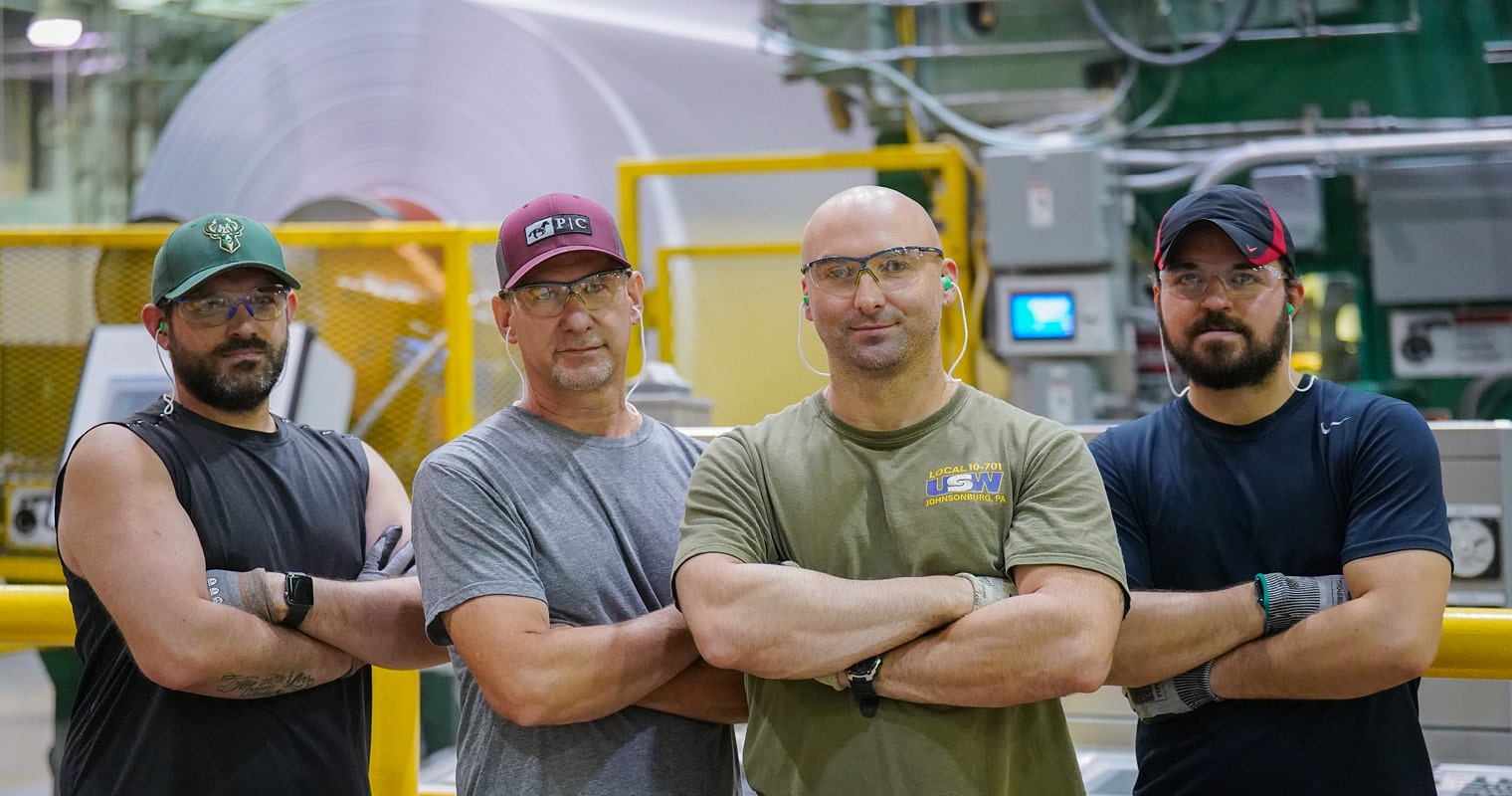
Despite the large number of long-tenured workers, USW members at the mill keep an eye on the future. They meet with each new worker who joins the union, explaining the benefits the USW has fought for over the years and encouraging them to stay involved in their union and their community.
“It’s important for all members to take an active role in the union, especially in areas like Johnsonburg, where the mill and the work force play such a significant role in the community,” said District 10 Director Bernie Hall, who represents Steelworkers in Pennsylvania. “Local 10-701 is a good example of a local that puts its community first.”
Cherry said his goal is to make sure the company and its workers can continue to prosper in the Johnsonburg area for generations to come.
“Knowing the history of the mill when there was no union, and the unfair treatment of workers – that always sticks in my head,” Cherry said. “I want to help this mill produce good products and see that it stays running for years to come.”

By clicking Sign Up you're confirming that you agree with our Terms and Conditions.
Recent News Articles
Want to Learn More?
See how the USW is making a real difference in our communities and our workplaces.