Oil Workers Build Solidarity in Preparation for Bargaining
USW oil workers are determined to build on their strength and solidarity across the union as they prepare to negotiate a new contract this coming winter.
The USW’s national pattern agreement with the oil industry expires January 31, 2026, and members set a comprehensive agenda for the upcoming negotiations during the National Oil Bargaining Program (NOBP) conference in August.
“As we prepare for bargaining, we need to fight from every angle. We need to make our demands clear,” said International President David McCall as he kicked off the NOBP conference in Pittsburgh. “We must out-organize, out-educate and out-bargain management.”
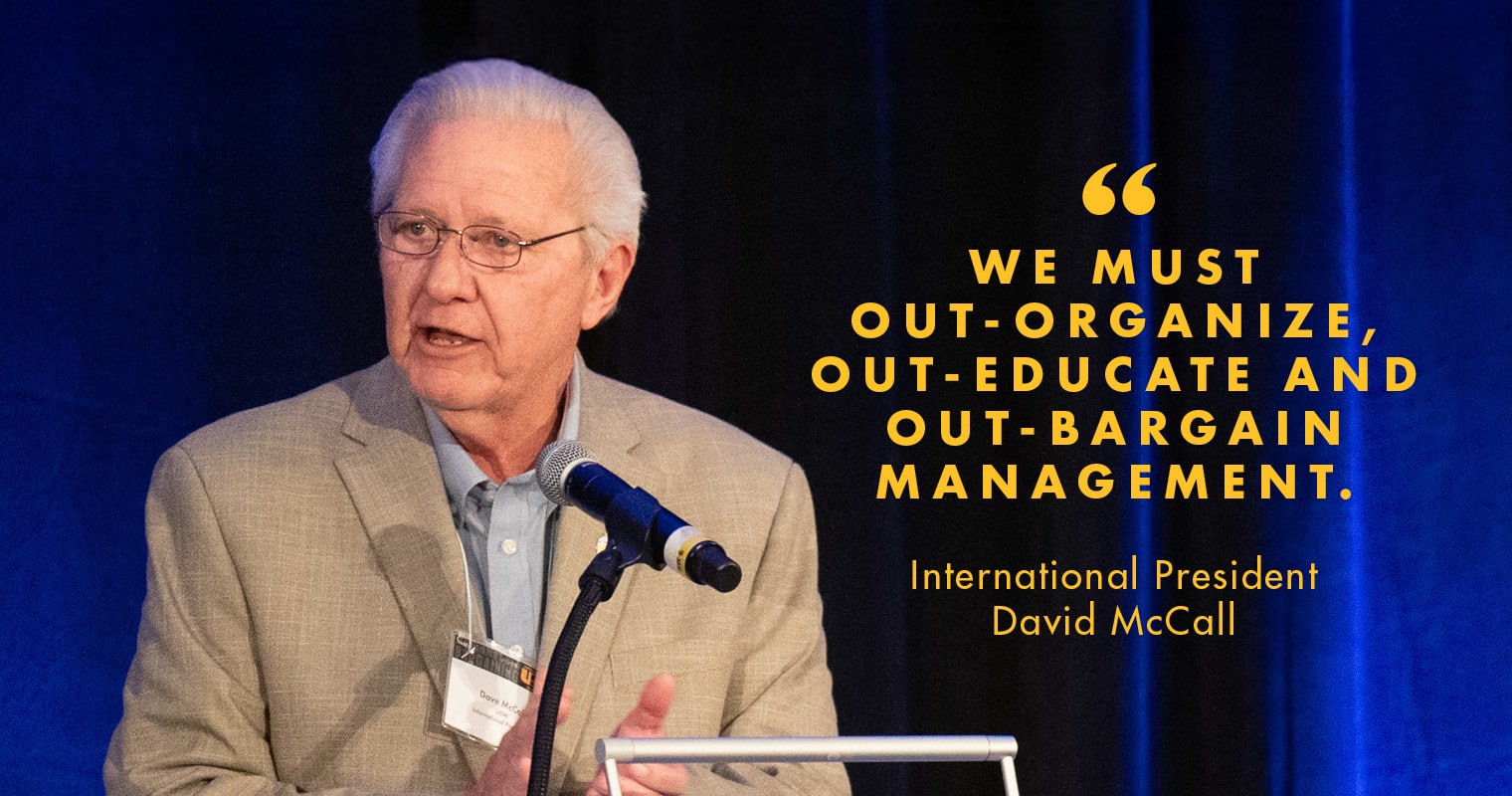
McCall’s rallying cry resonated with the hundreds of oil workers in attendance at the conference, who share the goal of bargaining a contract that provides them with a fair share of the industry’s massive profits.
Despite shifting market dynamics, several major oil companies, including ExxonMobil, Chevron, and Shell, have reported record profits in recent years, amid growing demand and higher prices.
International Vice President Roxanne Brown, who, alongside McCall and NOBP Chair Michael Smith, will lead the USW’s NOBP policy committee through the negotiating process, reminded workers that they do far more than produce energy. Petrochemicals are used in the production of plastics for household goods and auto parts, personal care products, clothing, construction materials, fertilizers, adhesives, sports equipment and a host of other goods Americans use every day.
“You help not just to power the economy, but to support so many of the products that we use every single day,” Brown said. “You are the unsung heroes of so much of what helps drive this country.”
By harnessing national solidarity over the past 60 years, union oil workers have won contracts that have bolstered wages and improved health and safety, retirement security, health care and paid time off, while protecting workers’ jobs from contracting out and in cases when facilities are bought or sold.
The NOBP includes more than 30,000 USW oil workers across dozens of employers in more than 200 bargaining units, including refining, production, pipelines, maintenance, storage and petrochemical facilities that represent roughly two-thirds of all U.S. refining capacity.
McCall reminded conference delegates that while oil production powers the economy, it also provides the nation with energy independence and national security in times of crisis.
As employers invest in new technologies and green energy sources, the USW will fight to make sure those positions are family- and community-supporting union jobs as well, McCall vowed.
“Those are our jobs too, and we need to keep them,” he said. “This is an opportunity to grow our membership.”
Brown said that those new investments will not prevent the union from continuing to fight for jobs at existing refineries.
“We’re going to continue to push the industry to make the kinds of investments that will bring our facilities into the future,” she said.
Smith urged members to return to their locals and have member-to-member conversations about the importance of solidarity as bargaining gets under way.
“The principle of unity among workers across the industry is what makes our national bargaining program strong,” said Smith. “When we face off against a powerful, profitable industry, our best weapon is the power of our solidarity.”
That unity among rank-and-file members will make the difference, Secretary-Treasurer Myles Sullivan told members.
“Everything you do every day on the shop floor leads to collective bargaining,” Sullivan said. “It all comes together.”
By clicking Sign Up you're confirming that you agree with our Terms and Conditions.
Want to Learn More?
See how the USW is making a real difference in our communities and our workplaces.